 How-to
How to Personalize Wedding Music: A Complete Guide
Table of Contents
- Start with Your Love Story and Shared Memories
- Build a Complete Wedding Song List for Every Moment
- Explore Unique Wedding Song Ideas That Reflect Your Style
- Commission a Custom Wedding Song or Splice Personal Touches
- Use Wedding Song Dedications to Honor People and Moments
- Coordinate with Your DJ or Live Musician Early
- Invite Guest Input and Create a Collaborative Song Request Process
- Review Lyrics and Ensure Songs Match Your Occasion
- Frequently Asked Questions
Last Updated: October 21, 2026
Start with Your Love Story and Shared Memories
How to personalize wedding music starts with understanding what makes your relationship unique. Your love story is the foundation for every song choice you'll make throughout the day.

Sit down together and identify the moments that define your connection. Maybe you met at a concert. Perhaps a specific song played during your first kiss.
At Agondray Entertainment LLC, we work with couples who want their music to tell their story, not just fill time. When you understand your own narrative, choosing songs becomes easier.
Think about songs that have played during important moments. What was playing during your proposal? What song do you both love dancing to? These aren't just preferences. They're anchors to your shared memories.
Build a Complete Wedding Song List for Every Moment
A complete wedding music plan covers the entire day, not just the ceremony. You need songs for the processional, recessional, cocktail hour, dinner, and dancing. Each moment serves a different purpose.
Start by mapping out your timeline. When does the ceremony begin? How long is your cocktail hour? When does dancing start? Each transition needs music that fits the mood and duration.
Ceremony songs: processional and recessional
Your processional sets the tone for the entire event. This is the song your guests hear as they wait for you to walk down the aisle. It should feel meaningful but not so slow that it drags. Most couples choose processional songs between 2-4 minutes long.
The recessional is different. This happens after you're married. It should feel celebratory and joyful. Many couples choose upbeat versions of classical pieces or songs that make them smile.
Consider these options:
- Classical pieces like Pachelbel's Canon or Wagner's Bridal Chorus
- Modern instrumental versions of songs you love
- Original compositions commissioned just for your day
- Songs performed live by a musician or friend
The processional doesn't need to be the same song for everyone. Some couples have different music as each parent walks, then something special for the bride or groom. This personalizes the moment and honors the people walking with you.
Cocktail hour and reception timing
Cocktail hour music should be background music. Guests are talking, eating, and mingling. Choose instrumental versions of songs you love or upbeat but not intrusive music. This is where you can get creative with personalization.
If you have a favorite artist, find instrumental covers. If you love a specific genre, lean into it. Jazz, acoustic, or light pop all work well for cocktail hours. The key is keeping the energy pleasant without demanding attention.
Reception music changes as the night progresses. Dinner music is calmer. Dancing music builds energy. Plan for transitions between these phases. Your DJ or musician should know exactly when to shift the mood.
Explore Unique Wedding Song Ideas That Reflect Your Style
Generic wedding playlists exist everywhere. Your personalized list should reflect who you actually are as a couple.
Think about your wedding vibe. Are you formal or casual? Romantic or fun? Your music should match. If you're planning an upscale but fun wedding, your song choices should balance elegance with personality.
Browse songs by mood and theme. Create playlists on your favorite music service. Listen to them together. Notice which songs make you both smile or want to dance. These are your winners.
Consider covers and reimagined versions of songs you love. A string quartet can play your favorite indie song. An acoustic guitarist can perform a pop hit.
Don't overlook songs from meaningful moments in your relationship. If you bonded over a specific album, include songs from it.
Commission a Custom Wedding Song or Splice Personal Touches
If you want something truly unique, commission a custom wedding song. A songwriter can write lyrics about your love story and set them to music. This becomes a one-of-a-kind moment no other couple will ever have.
Custom songs work best for first dances or special moments during the reception. Imagine walking into your reception while a song plays that tells your exact story. Your guests will remember that forever.
Custom lyrics and original compositions
Working with a composer means explaining your story, your style, and your vision. The best custom songs feel authentic to who you are. They're not generic love songs. They're your song.
Discuss your budget, timeline, and preferences. Do you want something classical? Modern? Upbeat or emotional? The composer will guide you through the process. Custom songs require planning ahead.
Custom songs cost more than selecting existing music, but they're an investment in a truly personalized moment. If budget is tight, consider commissioning just one custom song for your first dance rather than multiple pieces.
Editing and splicing existing songs
You don't need a composer to customize your music. Many songs can be edited or spliced together to create something new. If you love the chorus of one song and the verse of another, a sound engineer can blend them.
Editing works well for ceremony songs. You might want just the first verse and chorus of a longer piece. A DJ or audio engineer can create a clean edit that fits your timeline perfectly.
Splicing is more complex but possible. Imagine combining your favorite upbeat song with a meaningful slower piece. The transition becomes a moment in itself. Work with a professional to ensure the splice sounds smooth and intentional.
Use Wedding Song Dedications to Honor People and Moments
Song dedications add emotional depth to your reception.
Dedicate a song to your parents. Choose something that represents your relationship or makes them smile. Announce the dedication before the song plays. Your guests will appreciate the heartfelt moment.
You can dedicate songs to people who've passed away. This honors their memory and includes them in your celebration. Many couples find this deeply meaningful.
Some couples dedicate songs to their wedding party. A song for your best man. A song for your maid of honor. These moments celebrate the people who matter most.
Keep dedications brief. A 30-second announcement before the song is perfect. Long speeches kill the mood. Let the music speak.
Coordinate with Your DJ or Live Musician Early
Your DJ or live musician makes your personalized music plan come to life. Start conversations with them at least 3-4 months before your wedding. The earlier you coordinate, the better your execution.
Share preferences and timing requirements
Create a detailed document with your song preferences. Include ceremony songs, cocktail hour mood, dinner music, first dance song, parent dances, and any special dedications. Be specific about timing. Tell them exactly how long your ceremony is and when cocktail hour ends.
Share your love story with your entertainer. Explain why certain songs matter. This context helps them understand your vision and make smart decisions on the day of your wedding. If something unexpected happens, they'll know how to adapt while staying true to your style.
Discuss backup plans. What if a song doesn't work? What if timing shifts? Your DJ or musician should have flexibility built in. Ask how they handle changes and what their contingency plans look like.
Audio setup and venue logistics
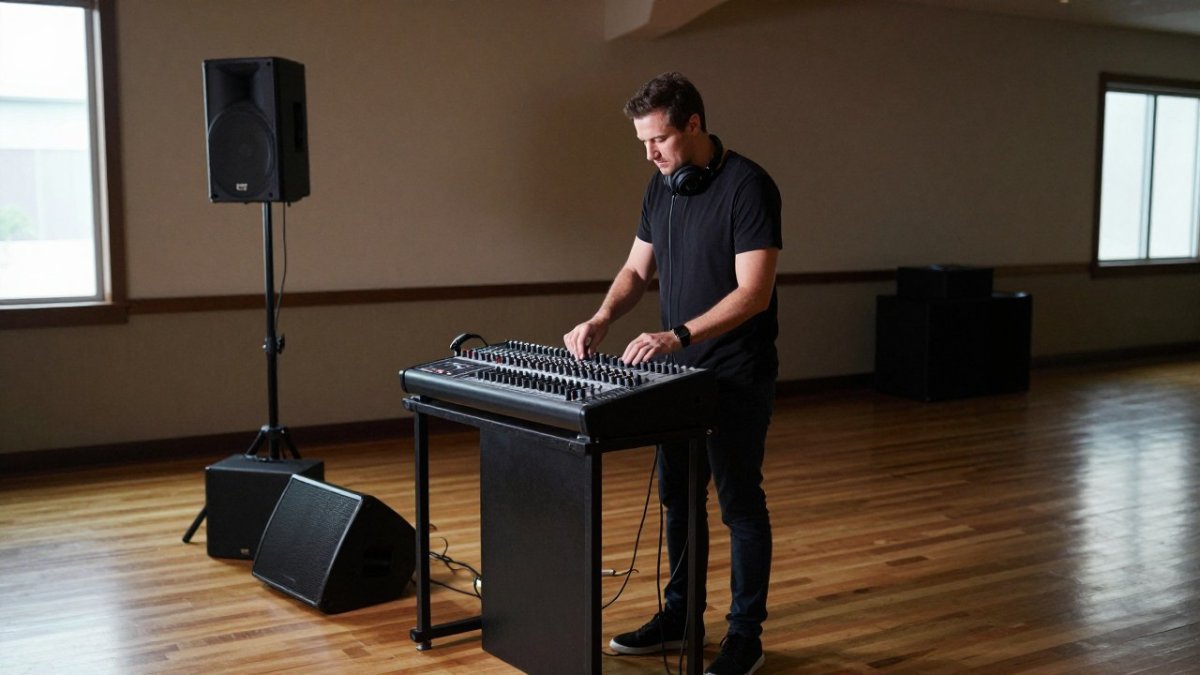
Your venue affects how music sounds. A small indoor space sounds different from an outdoor garden. Work with your DJ or musician to understand the venue's audio setup.
Visit the venue together if possible. Test the sound system. Identify where speakers will be placed. Check for dead zones where guests can't hear well. Address these issues before the wedding day.
Discuss technical details. How many microphones do you need for announcements? Where will the DJ booth be set up? Is there backup power in case of outages? These logistics matter more than couples realize.
Ask about licensing. Most professional DJs and musicians handle music licensing, but confirm this. Your venue might have restrictions on certain types of music. Clarify these rules upfront.
Invite Guest Input and Create a Collaborative Song Request Process
Some couples want guest input on music. A collaborative approach makes your reception feel more interactive and fun. Guests feel invested when they help shape the experience.
Create a simple song request form. Include it with your invitation or share it online. Ask guests to suggest 1-2 songs they'd love to hear.
Your DJ or musician reviews all requests and builds them into the playlist. This doesn't mean playing every request.
Set clear expectations. Tell guests that not every request will be played, but their favorites have a good chance if they fit the vibe. This prevents disappointment.
Some couples create a "do not play" list instead. Tell your DJ which songs to avoid. Maybe you can't stand a certain overplayed wedding song. Maybe a song has bad memories.
Review Lyrics and Ensure Songs Match Your Occasion
Before finalizing your song list, read the lyrics. Songs that sound beautiful might have lyrics that don't fit your wedding.
Some love songs are possessive or have dark undertones. Some upbeat songs have lyrics about breakups or sadness.
Check lyrics for all your ceremony songs especially. Your guests will hear every word. Make sure the message aligns with your values and the occasion.
For reception songs, focus on your first dance and any dedicated moments. These songs should feel meaningful and positive.
Use an online lyrics database to read full lyrics before committing. Many songs sound different when you actually read what they say.
Planning personalized wedding music takes time, but it transforms your celebration from generic to genuinely yours.
At Agondray Entertainment LLC, we understand that personalization is about more than song selection.
Frequently Asked Questions
How do I create a wedding song list that flows naturally throughout the day?
Start by mapping your timeline: ceremony (3-5 songs), cocktail hour (20-30 minutes of background music), and reception (6-8 hours). Plan your first dance, parent dances, and any special dedications. Then fill gaps with songs that match your overall vibe, upbeat for dancing, softer for dinner. Share this list with your DJ or musician at least 4-6 weeks before your wedding so they can prepare transitions and test audio quality.
What are some unique wedding song ideas beyond the typical first-dance classics?
Consider songs that tell your story: the song playing when you met, a meaningful duet you both love, or a track from a memorable trip together. Mix genres to reflect your personalities, blend jazz, indie, country, or pop. Include cultural or family traditions if relevant. Ask guests to suggest songs that remind them of you as a couple. Live musicians or DJs can also help you discover lesser-known gems that match your wedding vibe without feeling overdone.
Should I commission a custom wedding song, or is editing existing music enough?
Custom songs work best if you have a specific vision, budget flexibility, and time for composition and production. Splicing or editing existing songs costs less and works well if you want a medley of meaningful tracks or a shorter version of a longer song. Consider your budget, timeline, and how important a fully original piece is to your story. Many couples blend both approaches, custom lyrics over a familiar melody, or a custom arrangement of a song that matters to you both.
How early should I discuss personalized music choices with my DJ or musician?
Start conversations 3-6 months before your wedding. Share your song list, dedications, and any custom audio files at least 4-6 weeks ahead. This gives your DJ time to source tracks, test equipment, and plan transitions. Discuss venue acoustics, speaker setup, and backup plans if technology fails. Confirm that your musician or DJ has experience with your specific song choices and can execute any custom edits or splices you've planned.