 How-to
How to Avoid Bad Wedding DJs Before You Sign
Last Updated: November 4, 2026
Quick Summary
To avoid bad wedding djs, ask specific questions before signing: how many weddings they worked last year, what their backup plan is, and whether the person you meet will run your event. Check the equipment list, how they handle the MC role, and a contract that names the performer and sets a clear setup window.
- Ask how many weddings the DJ performed in the last year and expect a specific number.
- Confirm the same person who meets you will run your event, named in the contract.
- Request a written gear list and a described backup plan for equipment failure.
- Ask how the DJ handles the MC transition, from dinner into toasts and dancing.
- Get a named-performer clause, a setup window and a backup-performer clause in writing.
Table of Contents
- Why Bad Wedding DJs Cause Such Damage
- Wedding DJ Red Flags to Watch For
- Questions to Ask a Wedding DJ Before Booking
- Vetting the Equipment and Experience Behind the Booth
- Wedding DJ Contract Checklist: Terms That Protect You
- Building a Wedding DJ Backup Plan
- Booking Your Wedding DJ With Confidence
- Frequently Asked Questions
Most couples only learn a wedding DJ was a bad fit after the first dance has already started. By then the contract is signed, the deposit is gone, and there's no good way out. The problems that ruin wedding receptions are often visible during the booking conversation, but many couples never ask the right questions. This guide shows you how to spot a weak DJ before you sign, so your reception runs smoothly from the first song to the last.
Why Bad Wedding DJs Cause Such Damage
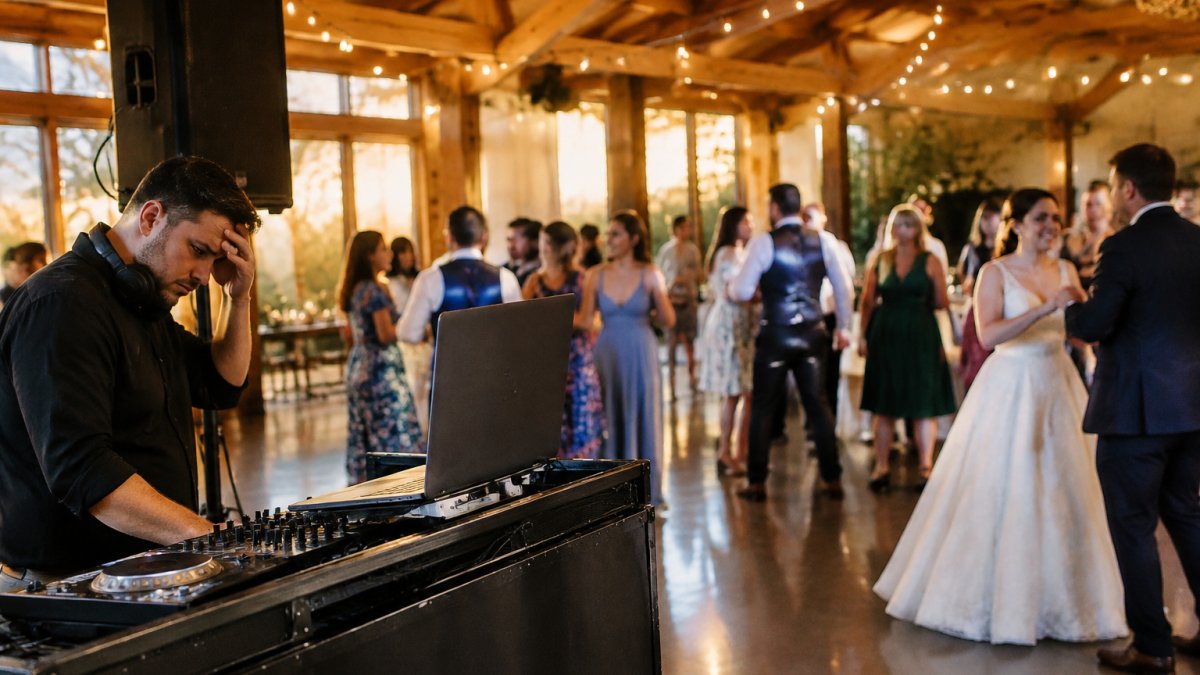
A bad wedding DJ can quietly ruin the parts of the day you care about most. The toasts get lost in static, the dance floor stays empty, and the timeline slips while guests wait at their tables.
The damage is rarely about one song. It's usually a chain of small failures: late setup, unclear announcements, and a playlist that ignores the crowd. Each one makes the next one harder to recover from.
- Guests disengage when the energy drops and never fully come back.
- Key moments like the grand entrance or cake cutting get missed or rushed.
- Couples often spend the rest of the night managing the DJ instead of enjoying the party.
Wedding DJ Red Flags to Watch For
Most bad DJ experiences show warning signs during the first conversation. Pay attention to how the DJ answers questions, how quickly they reply, and whether they ask you questions back. A DJ who listens is usually a DJ who will read the room.
Why Cheap DJs Often Lead to Bad Experiences
A very low price usually means something was cut. It might be backup equipment, insurance, a second person to help with setup, or time spent planning with you. Ask what the quote includes before you compare numbers.
Many businesses find that the cheapest option ends up costing more once you account for missing services. Compare what each quote covers, not just the bottom line.
Cheesy Jokes, Over-Talking and Other Warning Signs
Some DJs treat the microphone like a stage for their own act. If a DJ talks over the music, repeats the same catchphrases, or tells jokes that belong at a comedy club, guests notice. A good DJ keeps the focus on the couple and the crowd.
Watch for these warning signs during your consultation:
- They interrupt or rush you while you describe your plans.
- They promise to play "anything" without asking about your music.
- They can't name a single past event they've worked.
Questions to Ask a Wedding DJ Before Booking
Good questions reveal more than a polished sales pitch. Ask them early, and take notes on how clearly the answers come. Vague or defensive replies are a sign to keep looking.

Here are questions worth asking every DJ you interview:
- How many weddings have you performed in the last year?
- What is your backup plan if equipment fails during the reception?
- Will the same person who meets with me run my event?
A short, direct answer to each question is a good sign. Hesitation or a long detour is worth noting.
Use these questions to compare DJs and note how clearly each one answers.
| Question | What a good answer looks like | Red flag |
|---|---|---|
| How many weddings have you performed in the last year? | A specific, recent number | Vague or no past events named |
| What is your backup plan if equipment fails? | A named backup source or partner | No backup described |
| Will the same person who meets me run my event? | Yes, with a named performer | A substitute is likely |
| How do you handle guest requests and a do-not-play list? | A clear process and list | No process |
| How will you coordinate with photographer, caterer and venue? | A described plan for coordination | Unclear or unwilling |
| What happens if the event runs long or the schedule changes? | A specific adjustment plan | No plan given |
| Can you provide a sample timeline or planning worksheet? | Yes, a sample is provided | Refuses or stalls |
Vetting the Equipment and Experience Behind the Booth
Most DJ articles stop at personality. That is a mistake, because a warm, well-spoken DJ behind a weak sound system will still produce a reception where the toasts clip, the dance floor sounds muddy, and the wireless mic drops out during the father-of-the-bride speech. Equipment is the part of the booking you can actually inspect before you sign, so treat it as a technical interview, not a vibe check.
Checking the Sound System and Backup Equipment
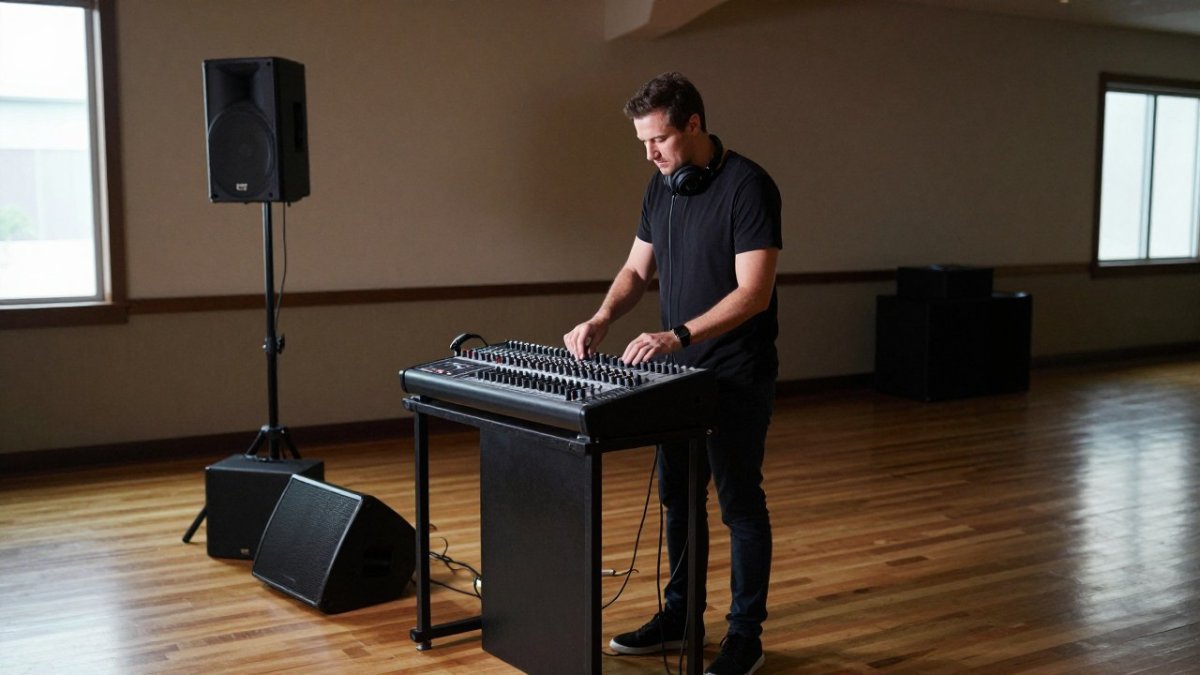
Ask for a written gear list tied to your specific venue, not a generic brochure. You can see what a professional setup and enhancements look like on our Event Enhancements page. A professional setup for a wedding of this size typically includes:
- Two main powered speakers on stands (or a line array for larger rooms), rated for the room size and guest count.
- At least one subwoofer if the room is larger than a typical banquet hall or if the dance floor is in a separate space.
- A wireless handheld mic for toasts and a wireless lavalier or headset mic for the officiant and any readers.
Ask how the DJ tests sound before guests arrive.
Power is a failure mode couples often overlook. Confirm the DJ knows the venue's circuit layout and has a plan to avoid tripping a breaker when the lights and sound run together.
Watch out: a DJ who lists gear but cannot tell you the model names, or who describes a "full professional system" without specifics, is often renting or borrowing equipment and may not have a backup plan if a rental falls through.
The Role of the MC vs. the DJ
The DJ-to-MC transition is where most bad wedding DJs actually fail, and it is a skill you can screen for.
Ask the DJ to walk you through a specific transition, for example, how they move from the end of dinner into the toasts and then into open dancing. A strong answer includes:
- A cue to the caterer and photographer before the announcement, so the room is ready.
- A short, scripted introduction that uses the couple's names and the wedding party's names correctly.
- A volume and tone check on the mic before the first announcement, not during it.
Ask whether MC duties are included in the package, and whether the same person who MCs will also run the music.
Watch out: a DJ who says they "don't really do announcements" or who plans to hand the mic to a family member may struggle to manage the room, which can leave a reception feeling disorganized even when the music is fine.
Wedding DJ Contract Checklist: Terms That Protect You
Your contract is your safety net, and the most useful ones usually contain a handful of specific clauses. Read every line before you pay a deposit, and ask for changes in writing. Verbal promises from a friendly sales call do not survive a bad night.
The Clauses That Actually Protect You
Most wedding DJ contracts are written to protect the vendor. That is normal, but it means you have to look for the clauses that protect you. The following are the terms worth negotiating before you sign:
- A named performer clause. The contract should name the specific DJ who will run your event, not just the company. If the company reserves the right to substitute "a qualified DJ," ask for the named person and a written commitment that any substitution must be approved by you in advance.
- A setup and sound-check window. The contract should state the arrival time, the setup completion time, and the sound-check time relative to your ceremony or cocktail hour. A DJ who arrives 30 minutes before guests is a DJ who will be plugging in cables while your grandmother is finding her seat.
- A detailed scope of services. List MC duties, lighting, ceremony sound, cocktail-hour music, and any extras as separate line items. If it is not written down, it is not included, regardless of what the sales call implied.
Escape Clauses and Post-Event Recourse
This is the part most couples never ask about, and it is where a well-written contract earns its keep.
Ask, too, about the dispute process. The contract should name a contact for complaints and a timeline for a response.
Watch out: a contract that says the DJ is not responsible for "equipment failure, venue issues, or circumstances beyond our control" without any reciprocal remedy is one-sided.
What to Do If the DJ Is Failing During the Event
You do not have to wait until after the wedding to act. If the DJ is missing cues, playing to an empty floor, or talking over the music, send your planner or a trusted family member to speak with the DJ directly and specifically, name the problem and the fix ("Please cut the banter and get the dance floor going after the cake cutting").
Building a Wedding DJ Backup Plan
Even a strong DJ can face surprises, so plan ahead. A backup plan protects your timeline and keeps your guests engaged if something goes wrong on the day.
- Ask the DJ for a backup person or partner company they trust.
- Keep a simple playlist on a phone or USB drive as a last resort.
- Share a clear timeline with your DJ, planner and venue coordinator.
A backup plan costs little and can save the reception.
Booking Your Wedding DJ With Confidence
You now know what to ask, what to look for and what to put in writing. Use that checklist to compare every DJ you interview, and trust the ones who answer clearly and treat your plans with respect.
If you're ready to talk about your reception, reach out to Agondray Entertainment LLC. We'll walk through your timeline, music and backup plan so you can book with confidence. Let's get started.
Frequently Asked Questions
What are the red flags when hiring a wedding DJ?
Watch for a DJ who will not show you a full event or video of a complete wedding, who cannot name the equipment they use, or who is vague about who will actually run the event. Other warning signs include pressure to sign quickly, unclear pricing, no written contract, and reluctance to discuss your do-not-play list or timeline. A DJ who talks over guests, relies on cheesy jokes, or has a generic playlist that ignores your requests is also a sign to keep looking. Trust your instincts during the first consultation, because communication before the wedding usually predicts how the day will go.
What questions should you ask a wedding DJ before booking?
Ask who will perform at your wedding, since some companies send a different DJ than the one who sold you the package. Confirm how many events they have done, how they handle song requests and do-not-play lists, and what their plan is if equipment fails. Ask how they coordinate with the photographer, caterer and venue staff, and whether they act as the MC or hire one. Request a written timeline draft and ask how far in advance they will meet or call to finalize announcements, first dance and special moments.
What should a wedding DJ include in a contract?
A strong wedding DJ contract lists the date, start and end times, the exact performer, setup and teardown times, and the total cost with payment deadlines. It should describe equipment, including backup gear, and state whether an MC is included. Look for clauses covering cancellation, late arrival, overtime fees, and what happens if the DJ cannot perform. Confirm liability insurance and how disputes will be handled. Ask for a copy of the full agreement before you pay any deposit, and keep a signed version for your records.
What should you do if your wedding DJ cancels or does not show up?
Start by contacting the DJ company in writing and asking for their written plan, since your contract should spell out the remedy. If the company cannot deliver, request a refund of payments according to the cancellation terms and ask for help finding a replacement. Keep records of every message, payment and the signed agreement, because these documents support any claim for a partial refund or recovery of costs. Having a backup plan, such as a second vendor on call or a playlist-based option for the reception, keeps the event on track while you resolve the issue.